We had a party in the Yoshimura Lab!
We enjoyed talking about many different things, and it was a great opportunity for the lab members to bond.


Welcome Party in May
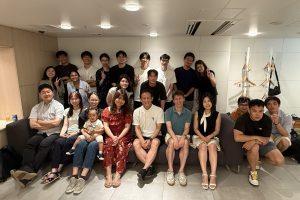
Thank you Party in July
2026.07.30
We had a party in the Yoshimura Lab!
We enjoyed talking about many different things, and it was a great opportunity for the lab members to bond.
Welcome Party in May
Thank you Party in July
2026.06.25
On June 22, 2026, the NTU–UTokyo Joint Workshop on Hydroclimate, Water Resources, and Environmental Risks was held in Kashiwa.
The workshop provided a valuable opportunity for members of Y Lab to interact with researchers from Prof. Wei Weng’s and Prof. Li-Pen Wang’s laboratories through research presentations and a field visit to the Metropolitan Area Outer Underground Discharge Channel.
The program covered a wide range of topics across four sessions: Atmospheric Moisture Tracking; Isotopes and Hydroclimate Dynamics, Water Resources, Food Systems, and Socioeconomic Resilience; Climate Dynamics, Earth System Processes, and Risk Assessment; and Hydroclimatic Extremes, Risk Assessment, and Remote Sensing. The diversity of research presented highlighted the interdisciplinary nature of hydroclimate studies and the importance of international collaboration.


Student research presentations (by Rie Uesugi)
Beyond the scientific discussions, the workshop offered a great opportunity to build new connections and exchange ideas among researchers from Japan and Taiwan. We hope that our colleagues from NTU enjoyed their time in Japan, and we look forward to meeting and collaborating with them again in the future.

Prof. Wei Weng and Prof. Kei Yoshimura (by Rie Uesugi)
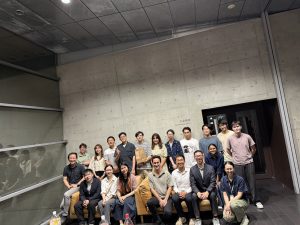
Group picture (by Rie Uesugi)
2026.05.10
The May 2026 issue of the Japan Science and Technology Agency’s JST News features Prof. Kei Yoshimura and his research on improving flood prediction and disaster prevention.
As extreme rainfall and flood events become more frequent due to climate change, both structural and non-structural disaster prevention measures are becoming increasingly important. Prof. Yoshimura’s research aims to predict floods up to 72 hours in advance by combining satellite observations with numerical model simulations, helping improve early warning systems and reduce disaster impacts.

For more details, please visit the article (Japanese).
2026.05.10
On May 8th, junior high school students from Shibuya Gakuen visited our laboratory.


Figs. 1 and 2 – Lectures with Prof. Kei Yoshimura and Ayane Ataka
During their visit, the students participated in short lectures, toured the IIS Kashiwa Campus, and attended explanations about Sphere and various research posters presented by Prof. Kei Yoshimura, Ayane Ataka (a Shibuya Gakuen alumna and current M2 student in our laboratory), as well as other staff and student members.


Figs. 3 and 4 – Tour and Sphere
We hope the students had an enjoyable and inspiring experience, and we wish them all the best in their future endeavors!

Fig. 5 – Research posters
2026.04.27
A research group from the School of Science and Engineering at Chuo University, the Center for Environmental Remote Sensing at Chiba University, and the Institute of Industrial Science at the University of Tokyo has successfully reproduced the isotopic ratios of precipitation, water vapor, seawater, and sea ice in a manner consistent with observations, using a global climate model that incorporates the behavior of “water isotopes.”

The results of this research have been published in the Journal of Advances in Modeling Earth Systems (JAMES).
For further details, please refer to the following paper and press release.
DOI:10.1029/2025MS005082
Press release:https://www.iis.u-tokyo.ac.jp/ja/news/5051/
2026.04.23
Department of Engineering and Civil Infrastructure
Master’s and Doctoral Programs (Application Schedule A): Friday, May 29, 2026 – Thursday, June 4, 2026, 3:00 p.m. (Japan Standard Time).
Entrance Exam Schedule: Monday, August 31 – Wednesday, September 2, 2026
Official Site:https://nenv.k.u-tokyo.ac.jp/admission
Department of Natural Environmental Studies
Application Schedule A: Thursday, June 4, 2026 – Wednesday, June 10, 2026, 11:00 PM (Japan Standard Time)
Entrance Exam Schedule: :Tuesday, July 28 – Thursday, July 30
Application Schedule B: Wednesday, November 11 – Tuesday, November 17, 2026, 11:00 PM (Japan Standard Time)
Entrance Exam Schedule: tbd
Official site: https://www.civil.t.u-tokyo.ac.jp/graduate_school/
Entrance Examination Information Session for the Department of Natural Environmental Science (In-Person)
An entrance examination information session for the Department of Natural Environmental Science will be held on Saturday, April 25th, from 1:00 PM. Those wishing to participate should register.
2026.04.07
Researchers from the Institute of Industrial Science, The University of Tokyo, and George Mason University have developed a new method to improve air temperature forecasts from one to five weeks ahead—without requiring additional model simulations.

This research was published in Proceedings of the National Academy of Sciences (PNAS).
For more information, please check the publication and press release:
Selective reuse of prior ensemble data improves the latest air temperature forecast over North America
DOI: 10.1073/pnas.2524516123
Press release: https://www.iis.u-tokyo.ac.jp/en/news/5043/
2026.04.06
On April 4th, the annual Meisuikai Cherry Blossom Viewing (Hanami) was held at Komaba Campus, hosted by Yamazaki Lab.
Despite the rain, the event was a great success. The gathering began with a seminar session, providing an opportunity for participants to get to know each other better and to share their current and past research, as well as their professional experiences. Afterwards, everyone enjoyed the food and the cherry blossoms in a warm and lively atmosphere.


We hope that everyone had a wonderful time, and we look forward to seeing you again at next year’s Hanami, scheduled for March 27 in Kashiwa.

2026.03.30
Kashiwa Science Camp (KSC) 2025 was held from February 17 to 20, 2026. In this very short period, four Bachelor students engaged in discussions, hands-on model simulations, data visualization, and presentations. This year’s topic continued and, in a different light, revisited the previous year’s study: When does the rain that precipitates in Japan arrive in Brazil?


The students have shown great potential as researchers, and we hope that they achieve all the goals they aim for. Congratulations, KSC team and students!
2026.03.10
The global version of JAXA’s Today’s Earth (TE-Global), which the Yoshimura Laboratory is collaborating with, has been updated. Please take a look.